

Magnesium Anodes
Magnesium anodes for fresh water craft and fresh water circuits (heat exchangers and tanks).
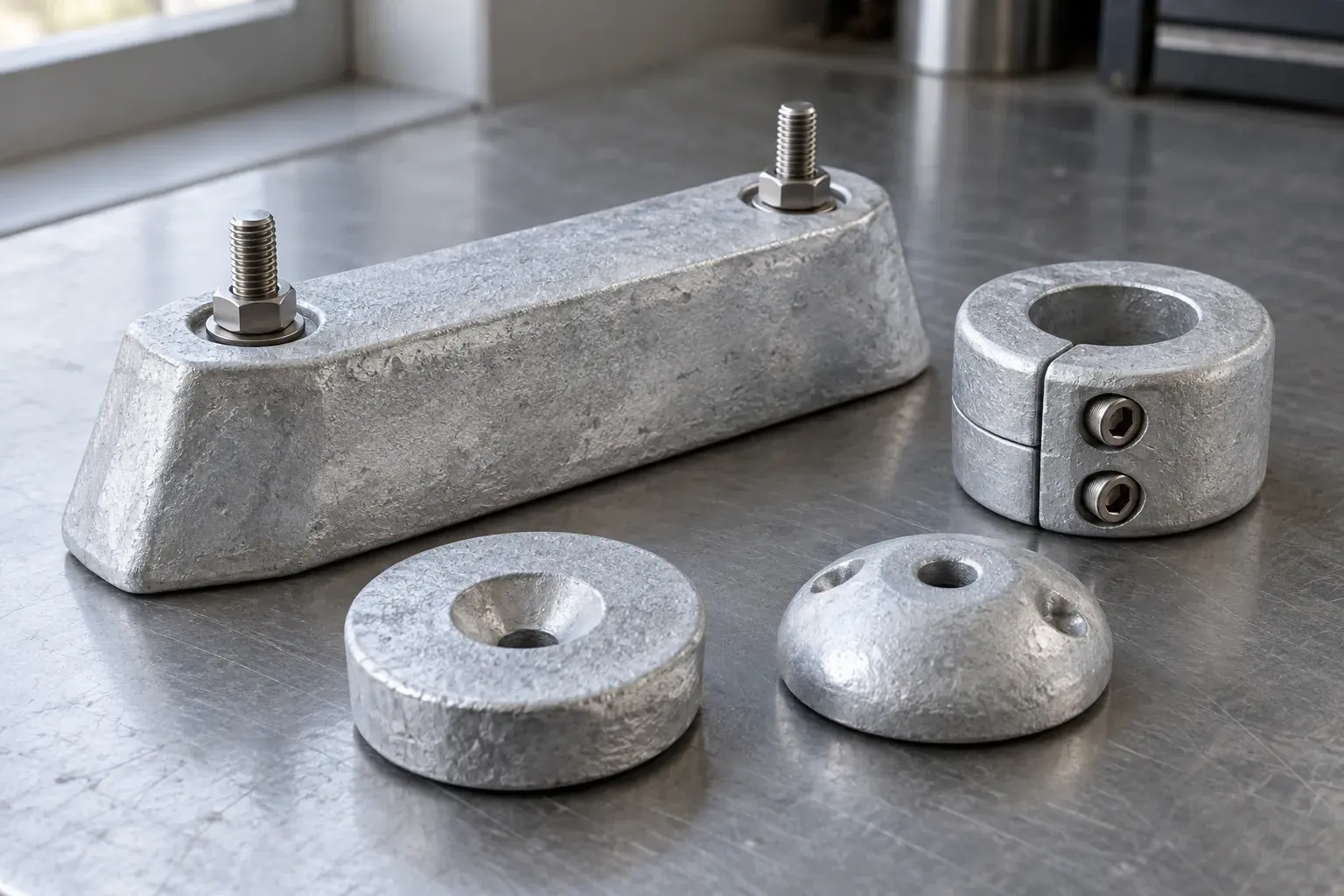
Overview
Magnesium has the highest driving voltage of the anode metals, which makes it the choice for fresh water, where zinc and aluminium passivate and stop giving cathodic protection. It is not used in sea water or brackish water, where it over-protects and is consumed far too quickly; aluminium is the choice for brackish water.
HIGHLIGHTS
- Highest driving voltage
- Made for fresh water
- Hull, shaft and rudder models
DETAILED INFORMATION
Magnesium anode alloys and standards
Magnesium anodes come in two main alloys. The standard Mg-Al-Zn alloy (AZ63 type) contains 5–7 % aluminium, 2–4 % zinc and 0.15–0.7 % manganese, with iron limited to 0.005 %, copper to 0.08 % and nickel to 0.003 %. The high-potential Mg-Mn alloy contains 0.5–1.5 % manganese and less than 0.05 % aluminium. The applicable standards are ASTM B843 and MIL-A-21412.
In the ABS guidance, the standard alloy runs at about −1.5 V against an Ag/AgCl reference electrode and the high-potential alloy at about −1.7 V. Measured against steel's −0.80 V protection criterion, that is a driving voltage of roughly 0.7–0.9 V, against only about 0.2 V for zinc. ABS describes magnesium as suitable for fresh water because of this high potential, and unsuitable for highly conductive sea water.
Magnesium's electrochemical capacity is about 1,200 Ah/kg, but its current efficiency usually stays around 50 %: a large part of the metal dissolves through self-corrosion without producing protective current. At about 1.7–1.8 kg/dm³ it is the lightest of the three metals.
Which water and which locations suit magnesium anodes
Magnesium anodes are for fresh water only: river and lake craft, yachts kept in fresh water and the fresh water side of heat exchangers are their main uses. In fresh water, zinc and aluminium become coated with an off-white oxide crust and stop working, while magnesium stays active. Our sacrificial anode guide explains which alloy suits which water.
Magnesium is not used in sea water or brackish water: its high potential over-protects and it is consumed very quickly. In brackish water choose aluminium anodes, and in sea water aluminium or zinc anodes. If a boat is moving to salt water, switch it to a suitable alloy.
Magnesium is not accepted in ship tanks: the ABS guidance allows it only in fresh water tanks not adjacent to cargo tanks, and US rules (46 CFR 35.01-25) prohibit it in cargo tanks carrying flammable or combustible liquids. ABS also notes that magnesium is not used on the aluminium hulls of seagoing ships; on aluminium boats and drives, use magnesium only in fresh water and as the manufacturer recommends.
Fitting and replacing magnesium anodes
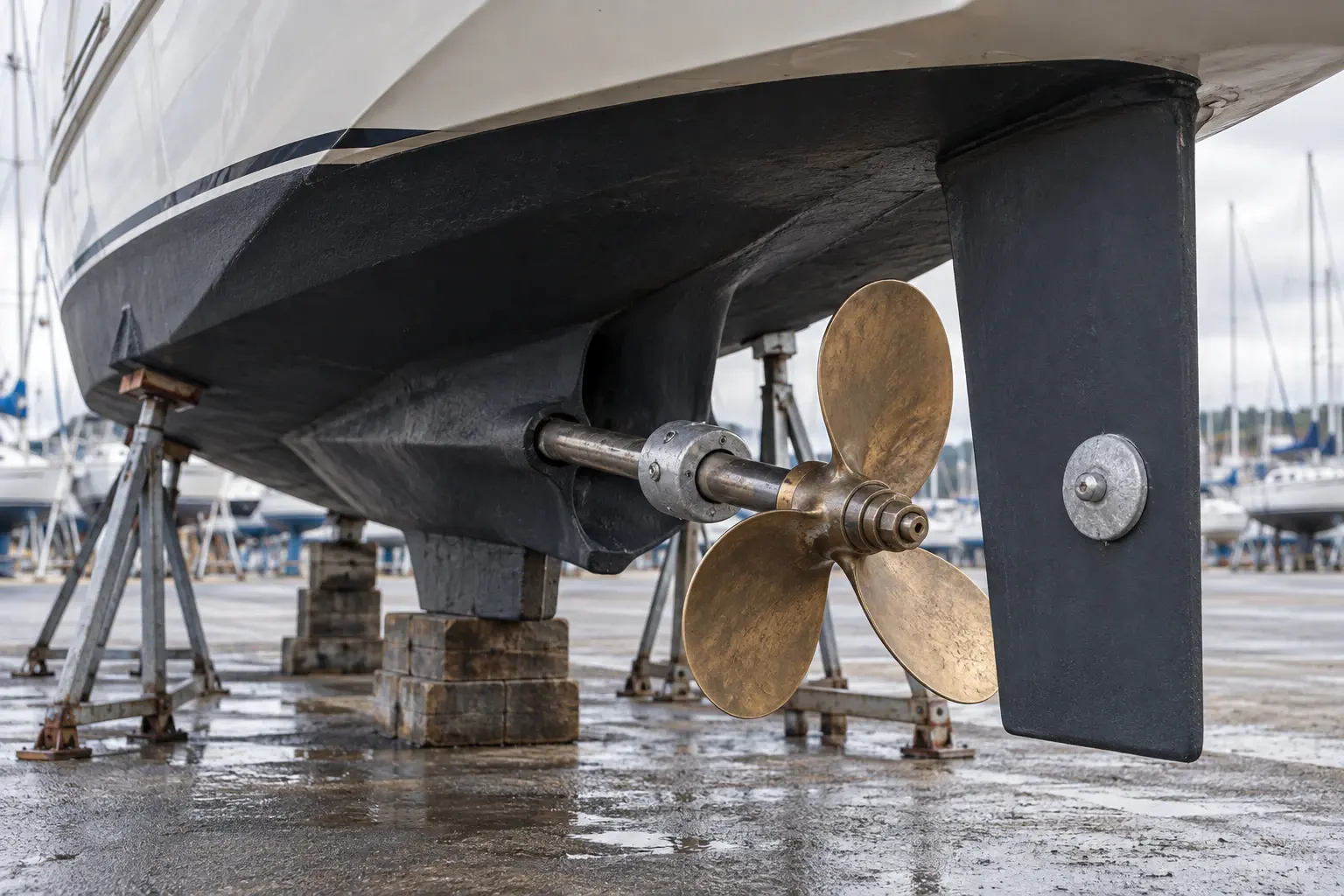
Our magnesium anodes come in hull, shaft and rudder models. They are fixed by bolting or welding their steel inserts; a shaft collar is made of two halves bolted together around the shaft. A shaft collar must not unbalance the shaft or restrict the water flow to the strut bearing.
The surface is never painted, and its electrical contact with the hull must stay low-resistance for its whole life. Replace a magnesium anode when about half of it has gone, or when what remains will not last until the next haul-out, and fit magnesium again.
Frequently asked questions
Can magnesium anodes be used in sea water?
No. Magnesium's potential is too high for sea water: it over-protects the hull, it is consumed very quickly and its efficiency drops. Marine engine makers also advise against magnesium in salt and brackish water. Use zinc or aluminium anodes in sea water, and aluminium in brackish water.
Can magnesium anodes be used on an aluminium boat?
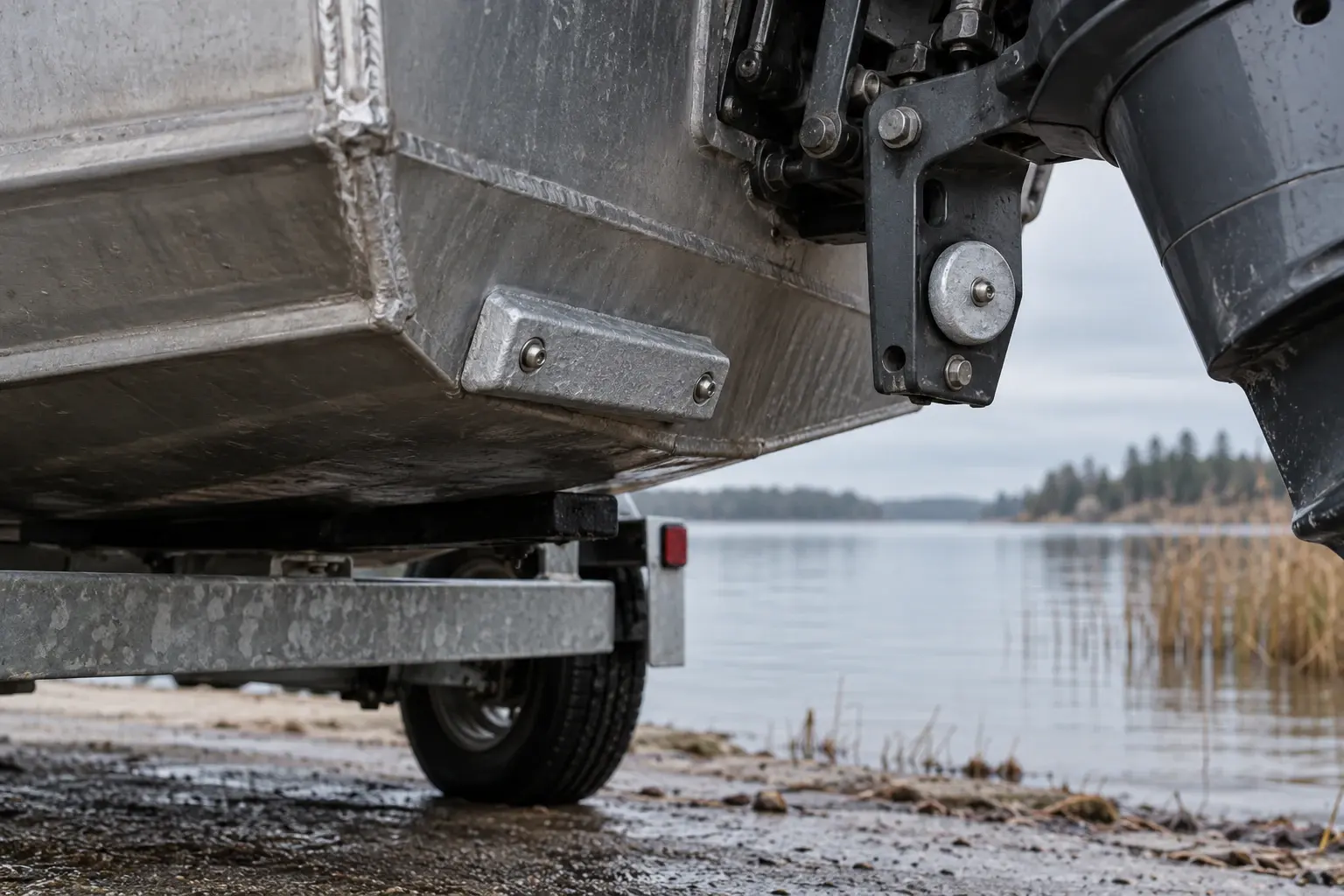
Only in fresh water and as the boat or engine maker recommends. Small-craft engine makers supply magnesium anodes for aluminium drives used in fresh water, while the ABS guidance notes that magnesium is not used on the aluminium hulls of seagoing ships, because aluminium is an amphoteric metal. If an aluminium boat moves to salt or brackish water, switch to aluminium anodes.
Why does a magnesium anode wear away so fast?
Magnesium is the most active anode metal and its current efficiency is usually around 50 %: a large part of the metal dissolves through self-corrosion without producing protective current. In fresh water this is expected. If it is disappearing much faster, a common cause is that the boat has been kept in brackish or salt water, where magnesium is consumed extremely quickly and aluminium should be used instead.
What if a magnesium anode is not wearing at all?
An anode that shows no wear is often not protecting anything. First check that its surface has not been painted and that the fixing bolts and contact faces are clean and tight; if the electrical contact is broken, it is out of the circuit. Impurities such as iron, copper and nickel above their limits can also cause passivation, so choose products that come with an analysis report.
Applications
- 01River and lake craft
- 02Yachts in fresh water
- 03Fresh water tanks and circuits
- 04Shaft and rudder protection
Other products
ALL PRODUCTS →
Custom Casting
I.C.C.P. Systems
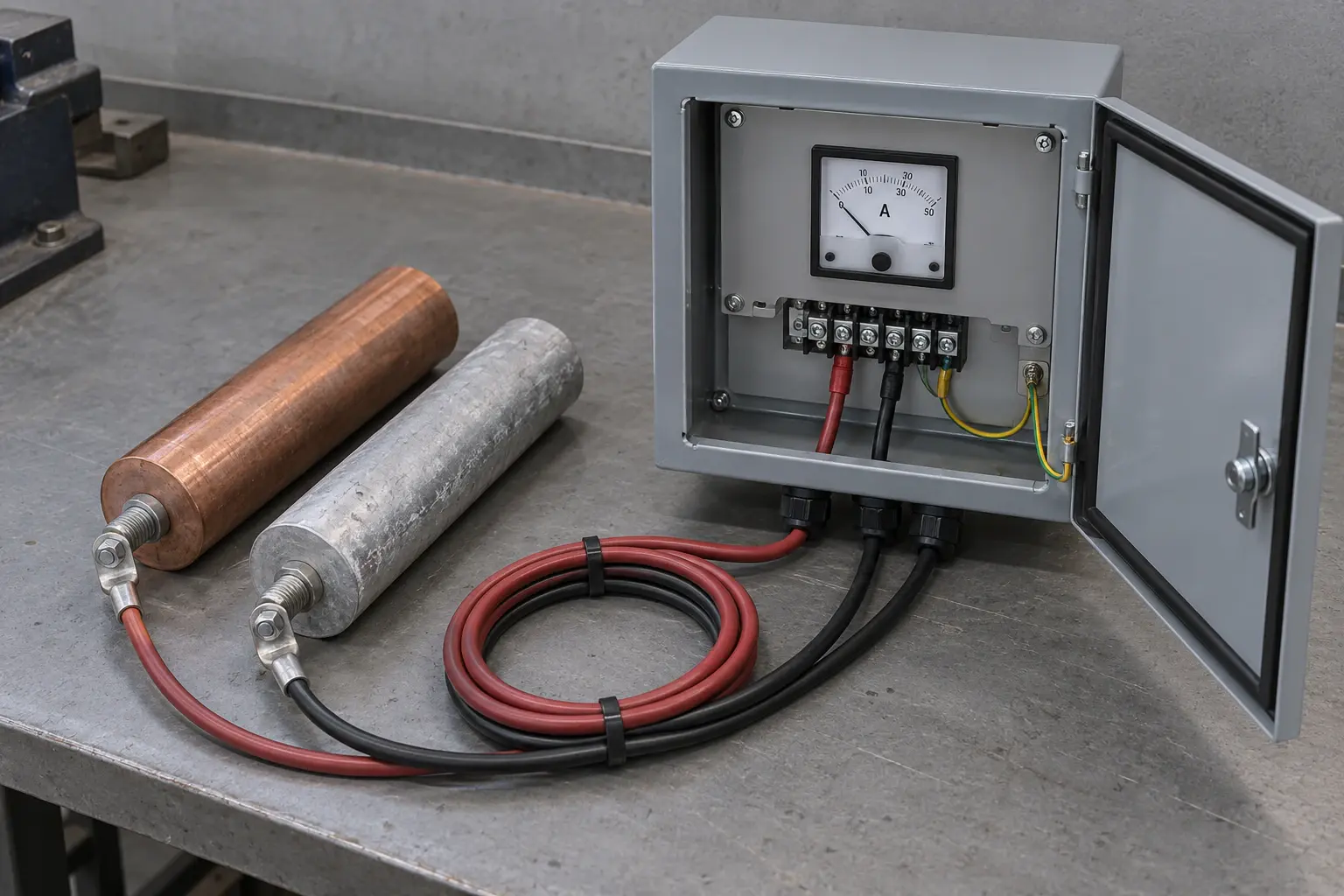
M.G.P.S. – AF Systems
Request a quote for your project.
Write to our technical team with vessel type, anode grade and quantities, a cathodic protection calculation or a service request. Send drawings and a measurement list and we will return a tooling and production quote shortly.
- ADDRESS
- Evliya Çelebi, 34944
Tuzla / İstanbul · TÜRKİYE - PHONE
- +90 216 447 20 24