

Aluminium Anodes
LR type approved aluminium alloy anodes; long life, high current efficiency.
- Polcor
- MARPO
Overview
Aluminium alloy anodes deliver more current per kilogram, so a lighter system gives long-lasting cathodic protection. Our LR type approved alloy is used on ships as well as offshore and port structures. Alongside what we cast in our own foundry, we also supply Polcor and MARPO products.
HIGHLIGHTS
- LR type approved alloy
- Long life, high current efficiency
- Lower total anode weight
DETAILED INFORMATION
Aluminium anode alloy and standards
The conventional alloy is Al-Zn-In: pure aluminium does not stay active in sea water, so zinc and indium are added. The US military standard MIL-DTL-24779 calls for 4.0–6.5 % zinc, 0.014–0.020 % indium and 0.08–0.20 % silicon, with iron below 0.08 % and copper below 0.005 %.
As conservative design values, DNV-RP-B401 uses 2,000 Ah/kg and −1.05 V against an Ag/AgCl reference electrode for aluminium in sea water; the practical values in the ABS guidance are about 2,500 Ah/kg and −1.09 V. Against zinc's 780 Ah/kg, that works out at roughly 2.5 to 3 times less mass for the same charge.
The former European standard for galvanic anodes, EN 12496, was replaced in 2025 by EN ISO 9351, which covers their use in sea water and saline sediments. Our aluminium alloy is LR type approved, and every heat ships with its analysis report.
Which water and which locations suit aluminium anodes
Aluminium works in sea water, brackish water and seabed mud, and keeps protecting in estuaries where zinc can passivate. It is not normally effective in fresh water, where magnesium anodes are used. Capacity falls as temperature rises: in the ABS guidance it drops from 2,500 Ah/kg at 25 °C to 500 Ah/kg at 80 °C.
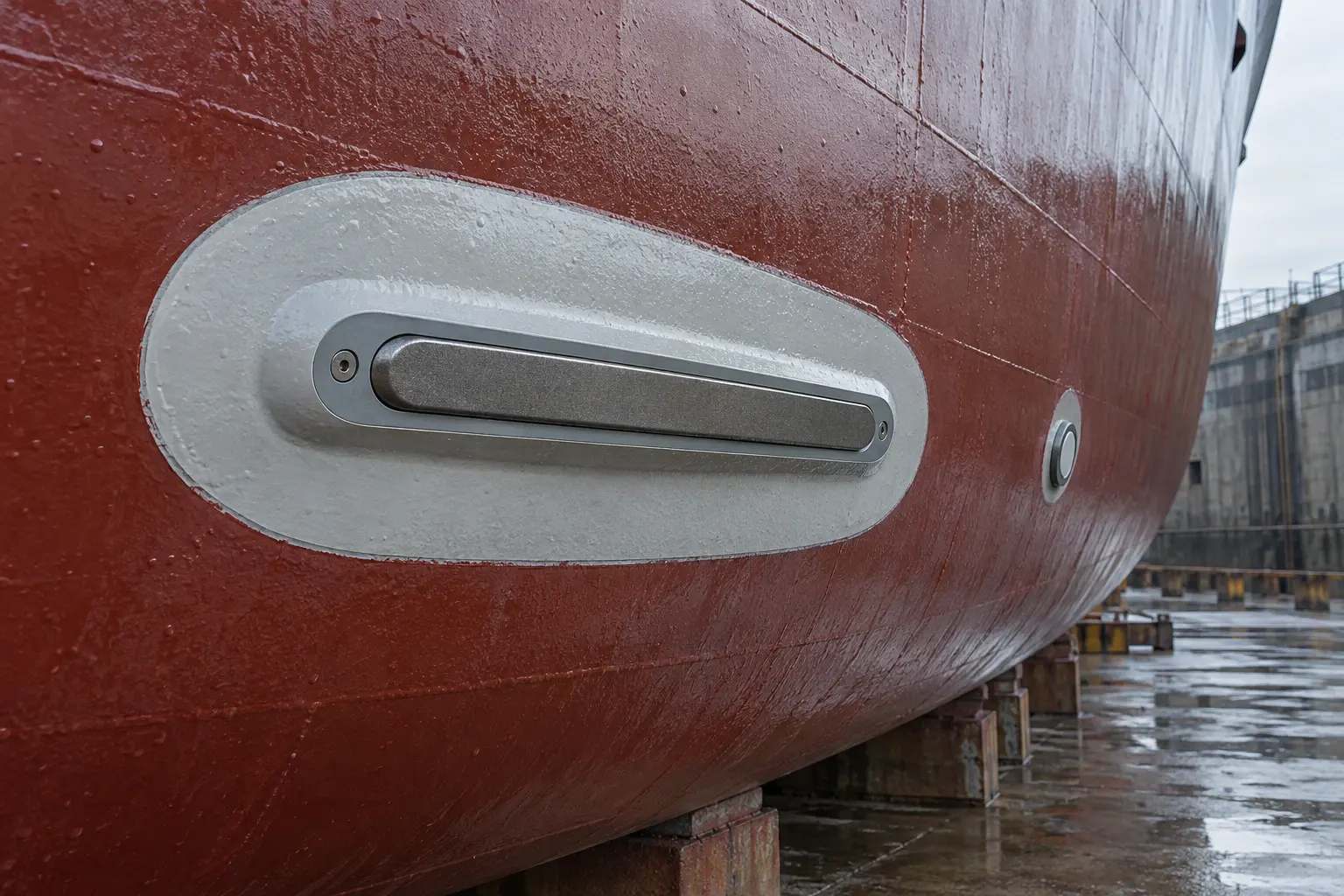
On a ship, aluminium anodes are fitted to the hull, the rudder and ballast tanks; in tanks they go mainly in the lower part, as several small pieces rather than one large one. Offshore platforms usually rely on galvanic protection because the design is simple and robust and needs no power, and aluminium is normally the preferred alloy there. Cathodic protection of jetties, quays and harbour piles is covered by ISO 13174.
A caveat for tankers: on ships carrying cargo with a flash point below 60 °C, aluminium anodes in cargo tanks and adjacent ballast tanks are limited to a falling energy of 275 J, because falling aluminium can strike a thermite spark. The limit is set by weight times height above the tank bottom; a 10 kg piece, for example, must sit lower than 2.8 m. The rule does not apply to ballast tanks not adjacent to cargo tanks, and the falling-energy limit does not apply to zinc anodes either.
Fitting and replacing aluminium anodes
Aluminium anodes are also cast on a steel insert, which is welded or bolted to the structure. Where one is fixed by any method other than welding, DNV-RP-B401 requires a continuity cable of at least 16 mm², and the resistance to the structure must never exceed 0.1 Ω. On a newbuilding, they are fitted before launching.
The working face is never painted and is protected during coating work; only the back face of flush-mounted types, facing the structure, may be coated. The replacement rule is the same as for zinc: renew it when about half has been consumed or when what remains will not last until the next dry-docking, and replace it with aluminium again.
Take care when removing old stubs: early aluminium alloys contained mercury, which concentrates in the remains, so precautions are needed, especially when heat is used. For general advice on choosing and sizing, see our sacrificial anode guide.
Frequently asked questions
Can aluminium anodes be used in fresh water?
Normally not. In fresh water an oxide film forms on the surface, and the metal passivates and stops delivering protective current. Aluminium works well in sea water and brackish water, and in brackish water it is preferred because zinc can passivate there. For craft and tanks that stay in fresh water, choose magnesium anodes.
Do aluminium anodes last longer than zinc?
Per kilogram, yes: aluminium delivers roughly 2.5 to 3 times more current than zinc, so far less weight is needed for the same period. Per volume the gap is small; our calculation with DNV design values gives almost the same total charge for two castings of the same size. Aluminium's real advantage is its low weight. Actual life depends on the protected area, the coating condition and the water.
Can aluminium anodes be used in ballast tanks?
Yes. Ballast tanks are one of the main places for aluminium, and they are protected galvanically only, not with impressed current. The castings go in the lower part of the tank, as several small pieces. The exception is tankers: in ballast tanks next to cargo tanks, aluminium anodes are limited to a falling energy of 275 J, so they are mounted low or zinc is used instead.
How can you tell aluminium anodes from zinc anodes?
The easiest way is weight: aluminium has a density of about 2.75 kg/dm³ against zinc's 7.13, so a same-size aluminium anode weighs about 39 % of a zinc one. Under DNV-RP-B401, each piece is also marked with the manufacturer, the material letter (A or Z), and the heat and serial numbers. For certainty, ask for the chemical analysis report of that heat; we ship every batch with one.
Applications
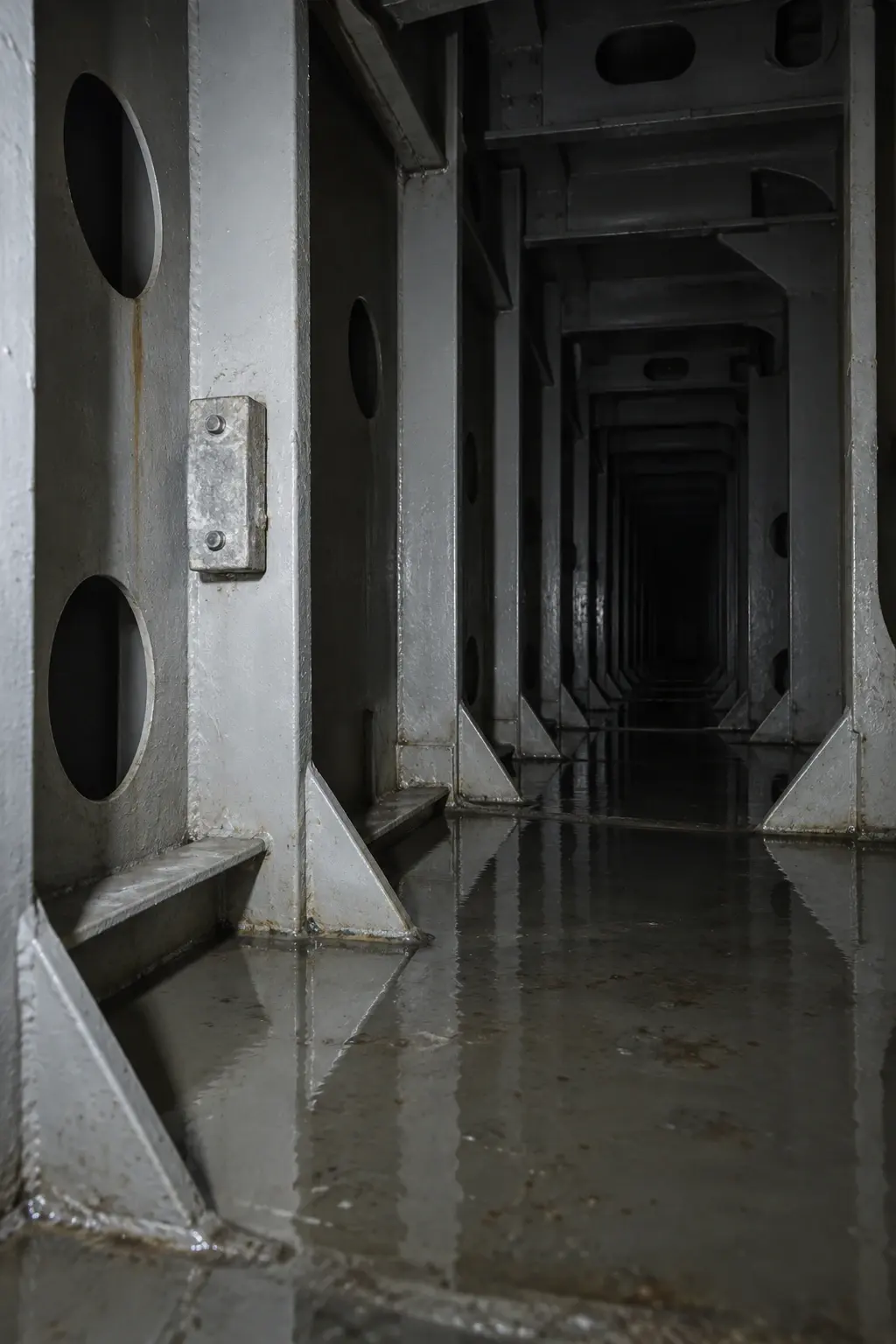
- 01Ballast tanks
- 02Ship hulls
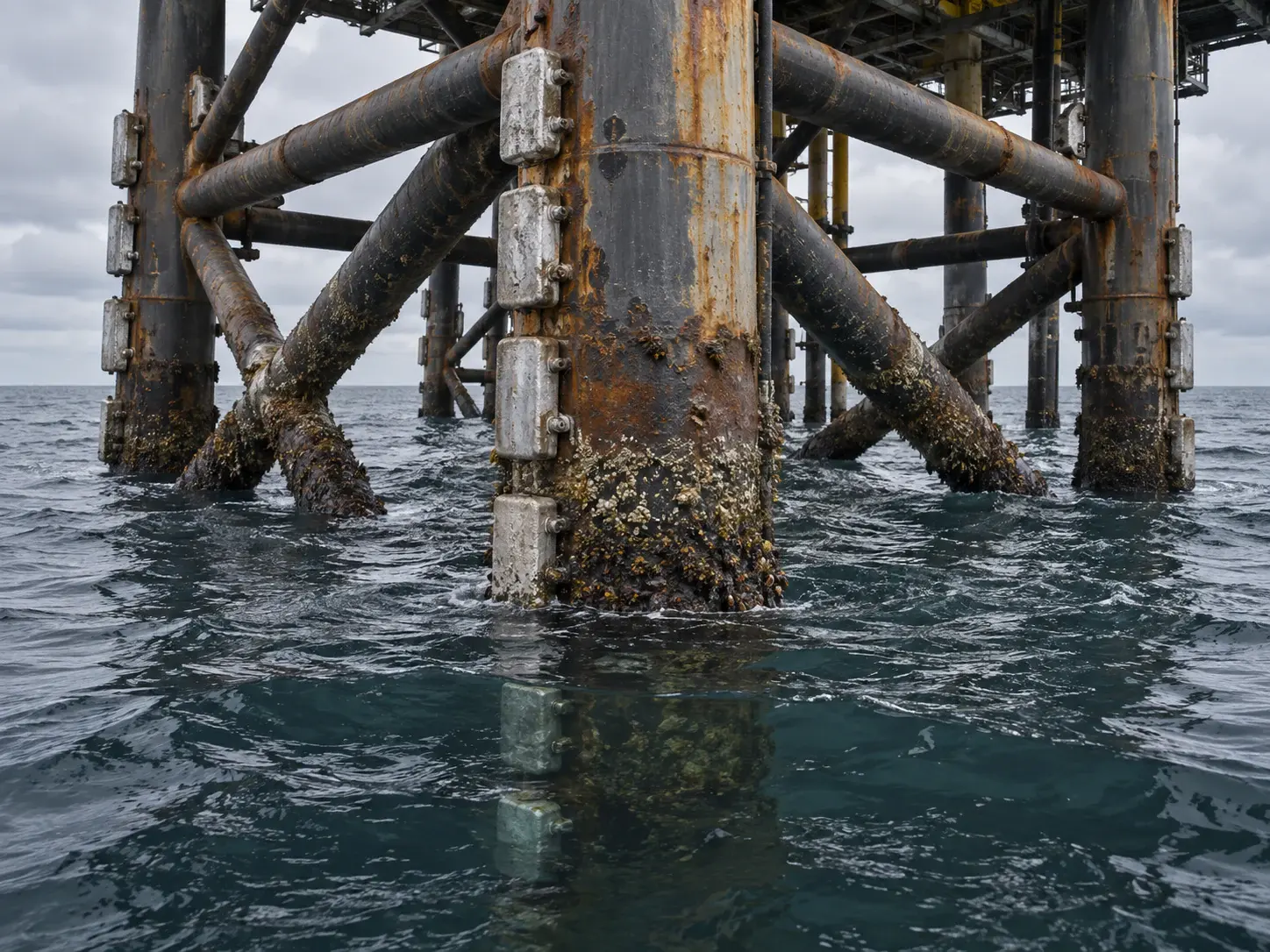
- 03Offshore platforms
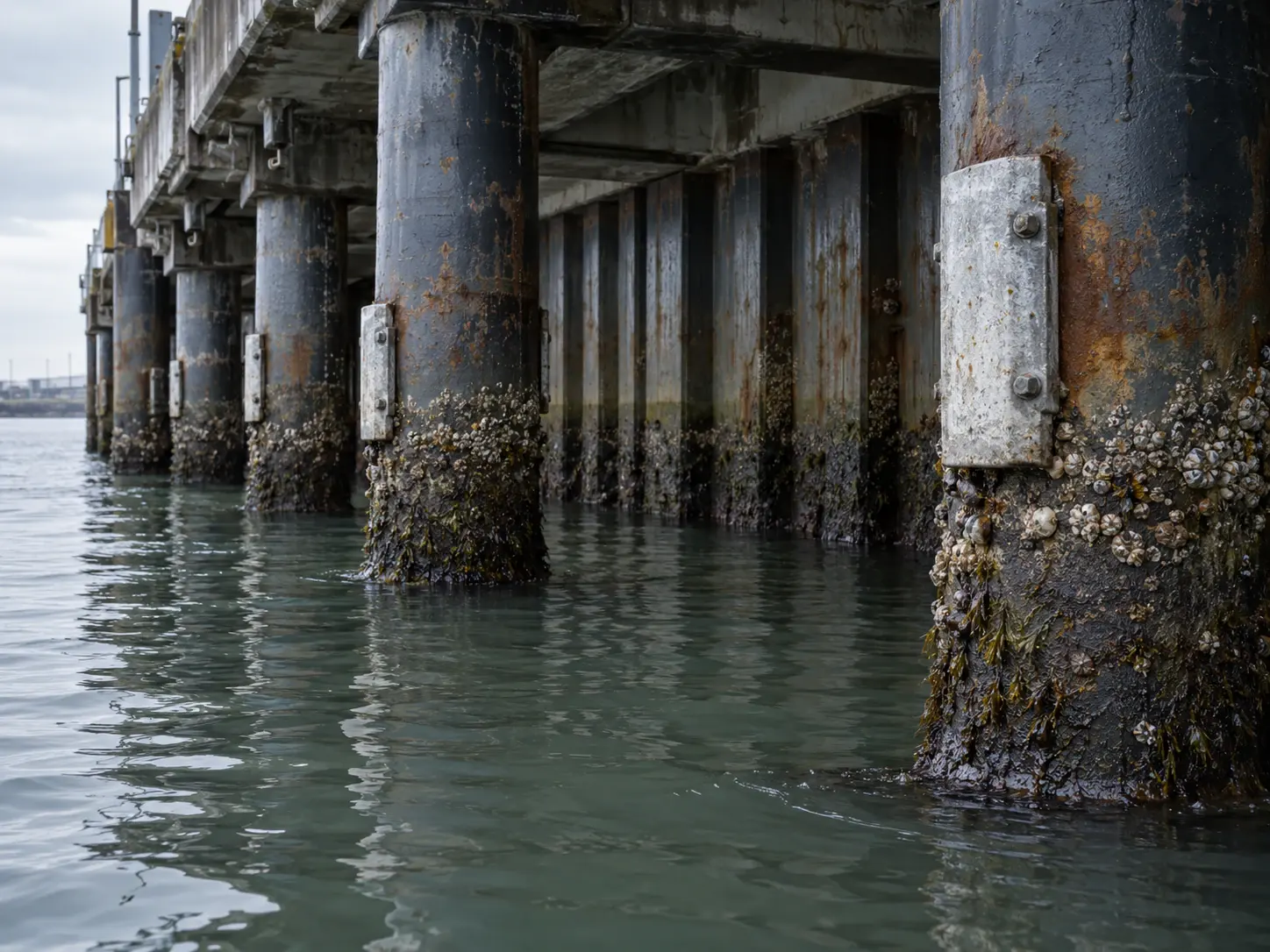
- 04Jetty and harbour piles
Other products
ALL PRODUCTS →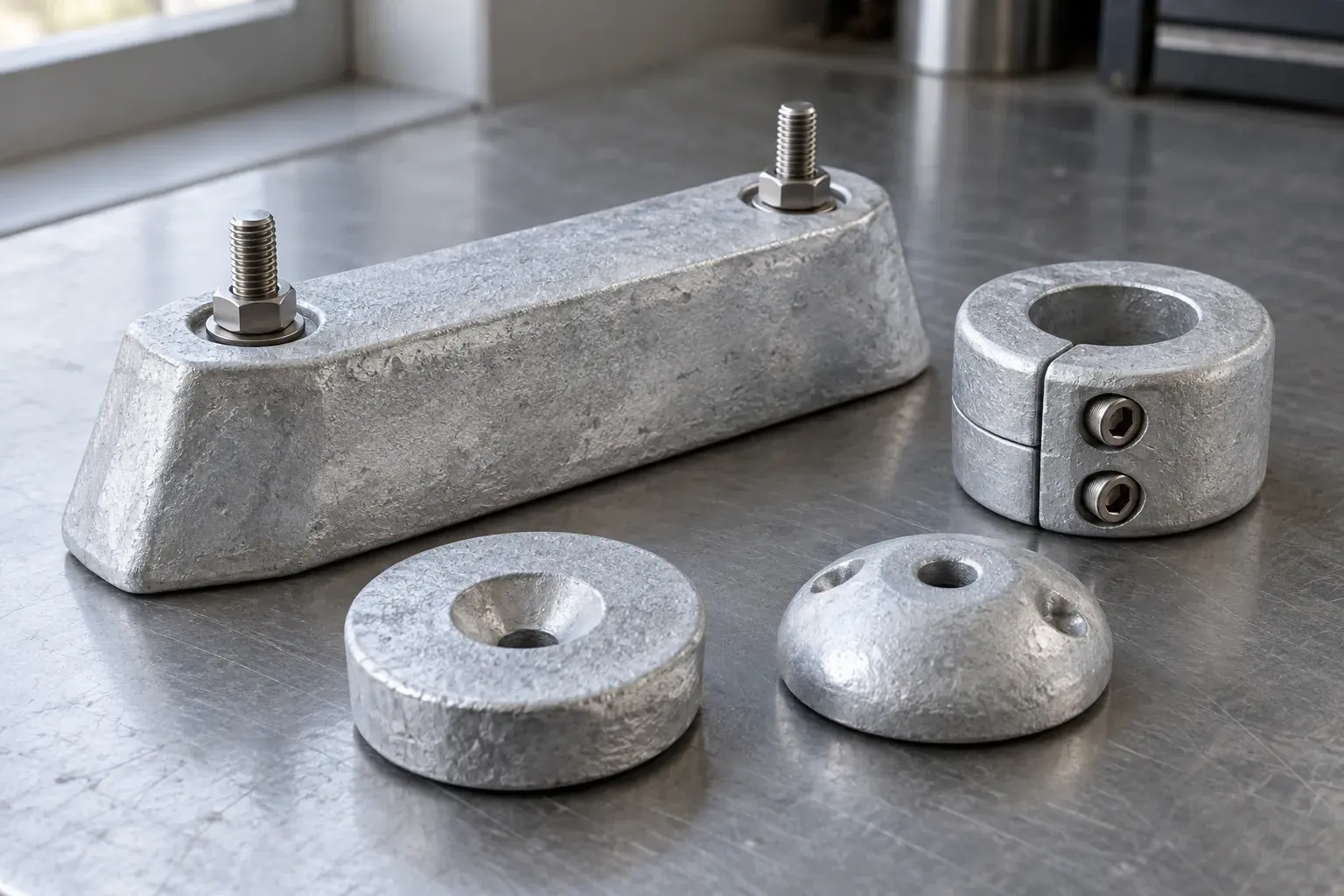
Request a quote for your project.
Write to our technical team with vessel type, anode grade and quantities, a cathodic protection calculation or a service request. Send drawings and a measurement list and we will return a tooling and production quote shortly.
- ADDRESS
- Evliya Çelebi, 34944
Tuzla / İstanbul · TÜRKİYE - PHONE
- +90 216 447 20 24