

Zinc Anodes
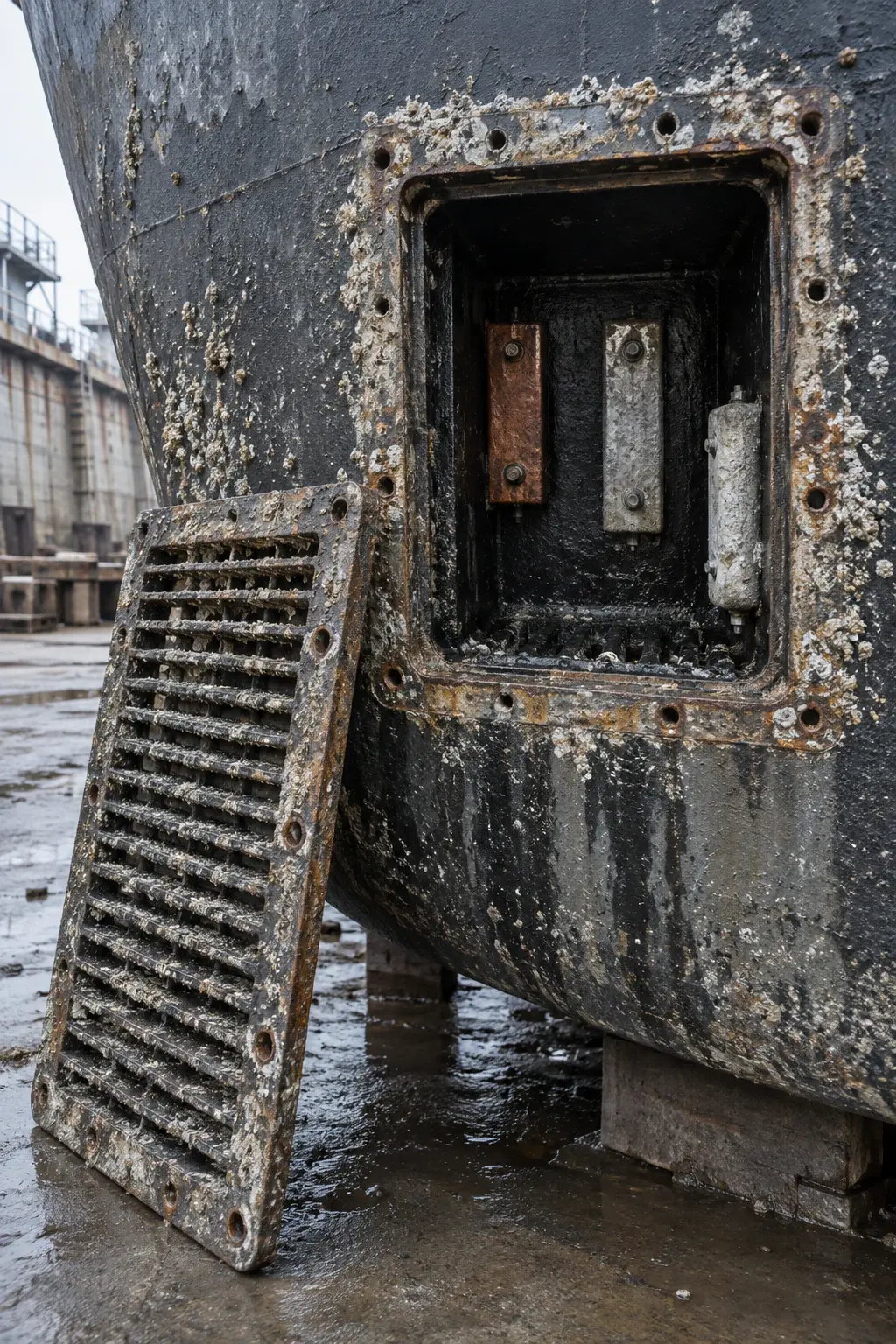
Welded or bolted zinc anodes for hulls, sea chests and ballast tanks.
- Polcor
- MARPO
Overview
Zinc is more active than steel in sea water, so a zinc anode corrodes in place of the structure it is fitted to and gives it cathodic protection. It delivers a steady, predictable protective current in salt water and is welded or bolted to the hull. Every batch cast in our own foundry ships with its analysis report, and we also supply Polcor and MARPO products.
HIGHLIGHTS
- LR and CCS type approved
- Welded or bolted fixing
- Analysis report with every batch
DETAILED INFORMATION
Zinc anode alloy and standards
Pure zinc self-corrodes too much and does not stay active, so a Zn-Al-Cd alloy is used instead. The aluminium and cadmium additions raise the alloy's tolerance for iron.
The US military standard MIL-DTL-18001 and DNV-RP-B401 set the same limits: iron and copper below 0.005 %, lead below 0.006 %, cadmium at most 0.07 % and aluminium 0.1–0.5 %. They matter because excess iron and copper in particular can passivate the casting and stop it working.
As conservative design values, DNV-RP-B401 uses a capacity of 780 Ah/kg and a potential of −1.00 V against an Ag/AgCl reference electrode for zinc in sea water; the typical practical value in the ABS guidance is −1.03 V. Every batch cast in our own foundry is analysed, and our zinc anodes are LR and CCS type approved.
Which water and which locations suit zinc anodes
Zinc suits sea water and seabed mud. In fresh water they become coated with an off-white oxide crust and passivate, and the same can happen in brackish water. In brackish water such as estuaries, aluminium anodes are the better choice, and in fresh water magnesium anodes. Our sacrificial anode guide compares all three alloys.
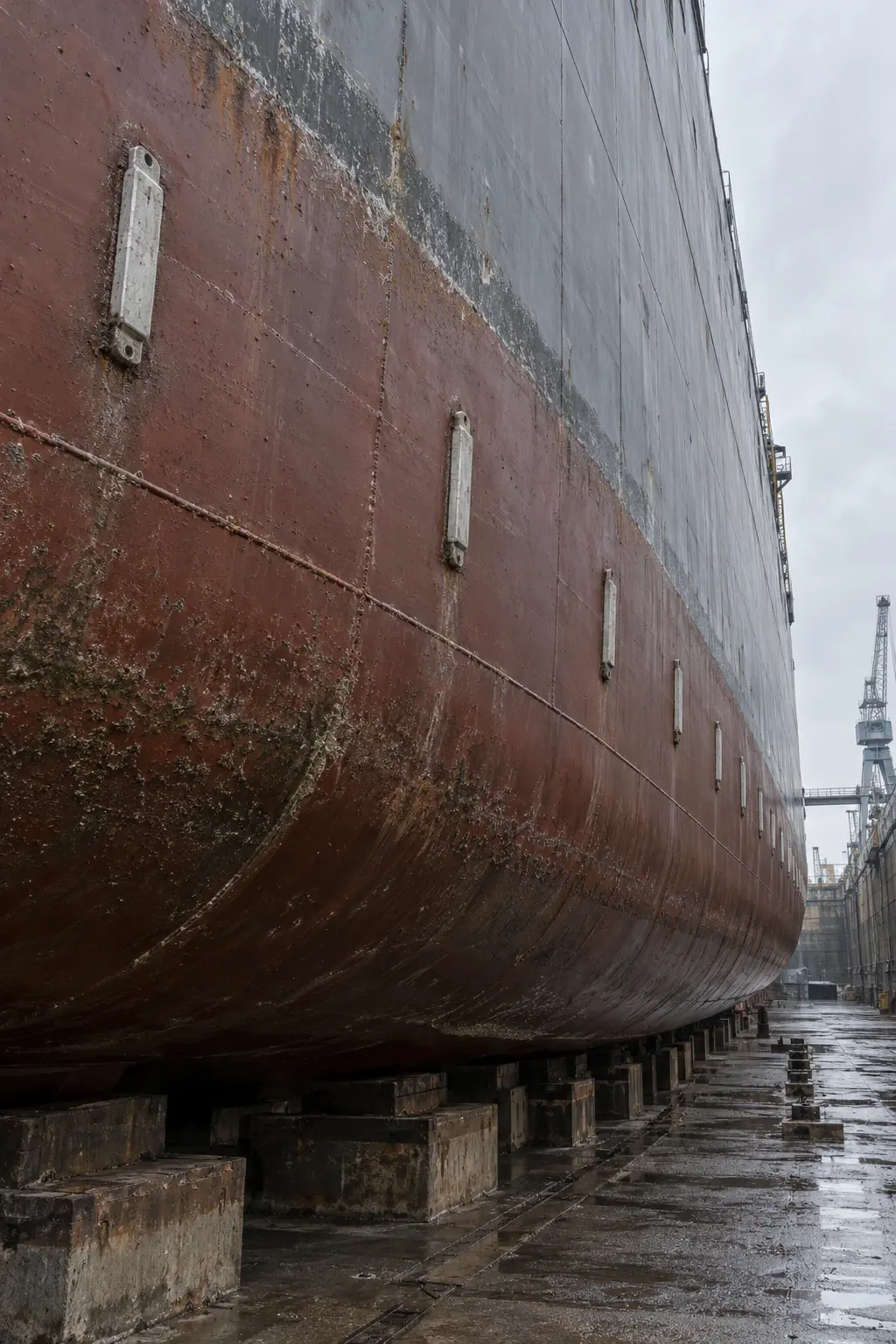
On a ship, zinc anodes go on the hull, on both sides of the rudder, inside sea chests, in ballast tanks, as propeller and shaft collars, and on the sea water side of condensers and heat exchangers. Many small pieces spread evenly over the hull protect more efficiently than a few large ones, and none are fitted in the zone just ahead of the propeller.
On tankers carrying cargo with a flash point below 60 °C, aluminium anodes in ballast tanks next to cargo tanks are limited to a falling energy of 275 J; this falling-energy limit does not apply to zinc. For the external hull of large ships with long dry-docking intervals, an I.C.C.P. system is an alternative, but ballast tanks use galvanic anodes only.
Fitting and replacing zinc anodes
A zinc anode is cast around a steel insert. On weld-on types the insert is welded to the structure, on bolt-on types it is bolted to studs; studs fired into the plating are not permitted. Wherever the anode is not welded, the electrical contact to the hull must be low-resistance and stay so for its whole life.
The working face of an anode is never painted: paint insulates it and stops the protection. They must be protected while the hull is coated and any paint spilled on them removed, which is why castings made to the military standards carry a cast or stamped "DO NOT PAINT" mark.
Replace a zinc anode when about half of it has been consumed. At dry-docking, check whether what remains will last until the next docking and renew it if not. Use the same alloy and type when replacing, because the system is designed around the anode material.
Frequently asked questions
Which is better, zinc or aluminium anodes?
Both protect a hull in sea water. On design and practical values, aluminium delivers roughly 2.5 to 3 times more current per kilogram, so the same protection takes a lighter system, and it also works in brackish water. Zinc is heavier, but the 275 J falling-energy limit in tanker ballast tanks next to cargo tanks does not apply to it, and it can be more reliable in seabed mud and in closed compartments with high bacterial activity. When replacing, stay with the alloy already fitted.
Can a zinc anode be welded?
The zinc itself is not welded; the weld is made on the steel insert cast inside it. On weld-on types this insert is welded straight to the hull, tank or sea chest. Bolt-on types are fixed to studs and need a low-resistance contact with the hull. Fired studs are not used, and on thin plating the insert is welded to a doubler plate extending 20 mm beyond it.
Is it good if a zinc anode is not wasting away?
No. An anode that shows no wear is usually not working. The usual causes are paint on its surface, poor electrical contact with the hull, passivation under an off-white oxide crust in fresh or brackish water, and too much iron or copper in the alloy. Once it stops working, the next most active metal bonded to the system starts to sacrifice itself instead.
Can zinc anodes be used in hot water?
Standard zinc anodes are used up to about 50 °C. At higher temperatures zinc's potential moves towards that of steel, and in some fresh waters it can even reverse above about 58 °C, so it no longer protects the steel. If they are for hot sea water circuits or heat exchangers, state the operating temperature in your quote request.

Applications
- 01Ship hulls
- 02Sea chests
- 03Ballast tanks
- 04Bow and stern thrusters
Other products
ALL PRODUCTS →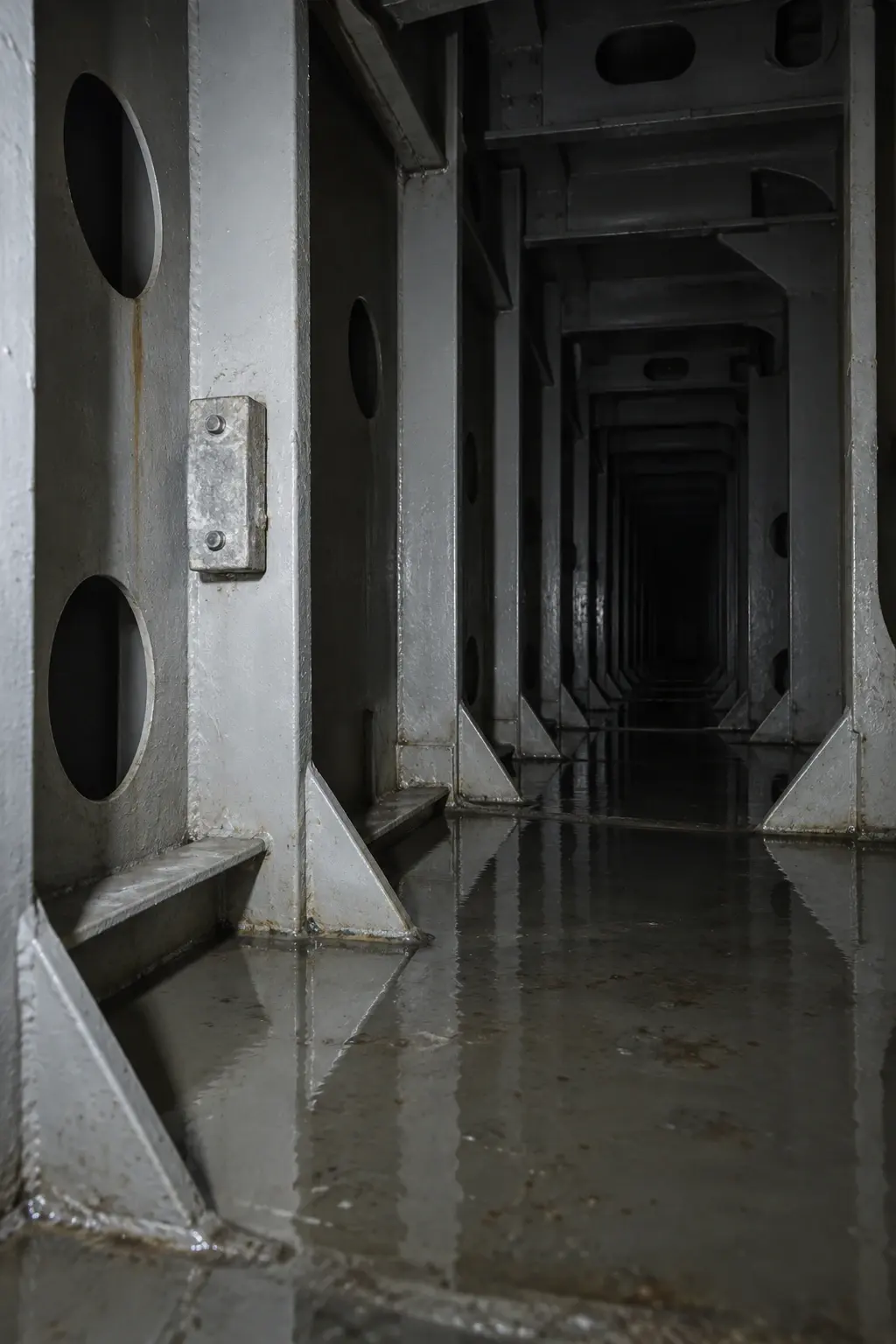
Aluminium Anodes
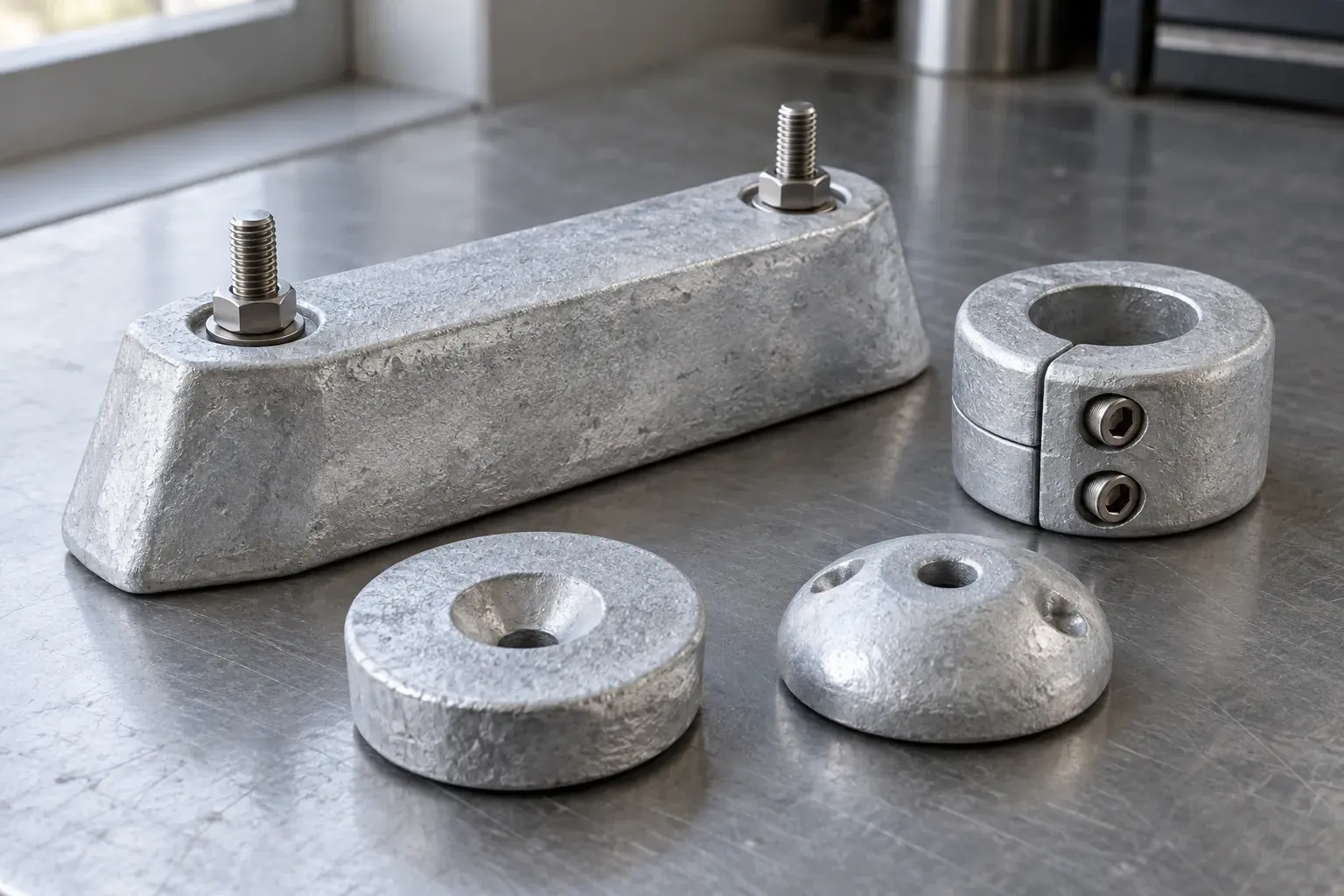
Magnesium Anodes

Custom Casting
Request a quote for your project.
Write to our technical team with vessel type, anode grade and quantities, a cathodic protection calculation or a service request. Send drawings and a measurement list and we will return a tooling and production quote shortly.
- ADDRESS
- Evliya Çelebi, 34944
Tuzla / İstanbul · TÜRKİYE - PHONE
- +90 216 447 20 24